
An angled bob lives or dies on the one-inch drop from nape to front, and it holds best on 1A to 2B hair you can roll under with a round brush. These angled bob haircuts run from jaw to collarbone, blunt or layered, and need a trim every five to ten weeks before the line blurs.
1. Classic Angled Bob at the Jaw
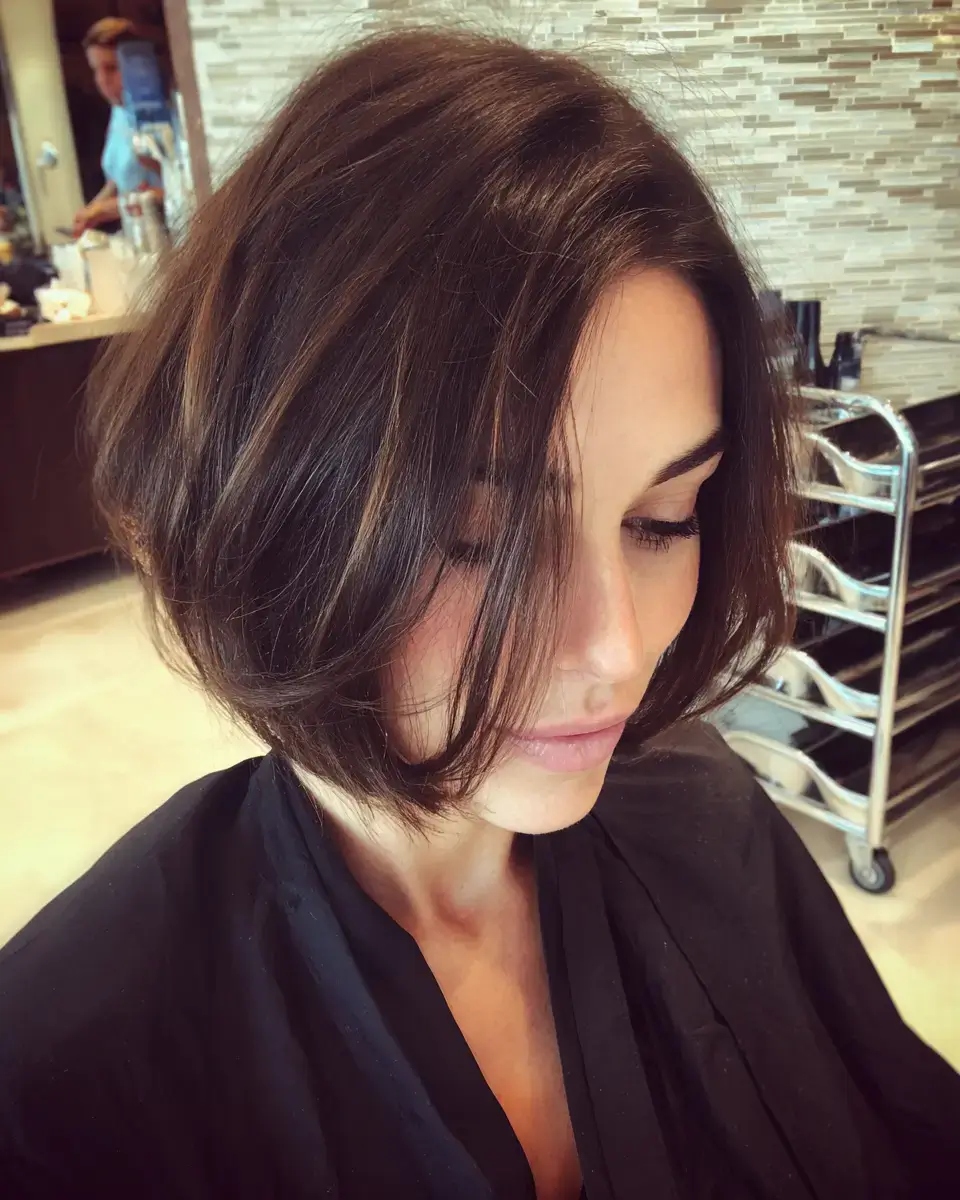
The classic angled bob is the first of the angled bob haircuts I show, with the nape an inch shorter than the front and the front landing at the jaw. I cut the nape on dry hair, then angle the line forward to the jaw with the shears flat. It suits fine to thick density and 1A to 2A texture on round and square faces. Blow-dry with a round brush rolling the front under. Trim every six weeks.
2. Long Angled Bob Haircuts at the Collarbone
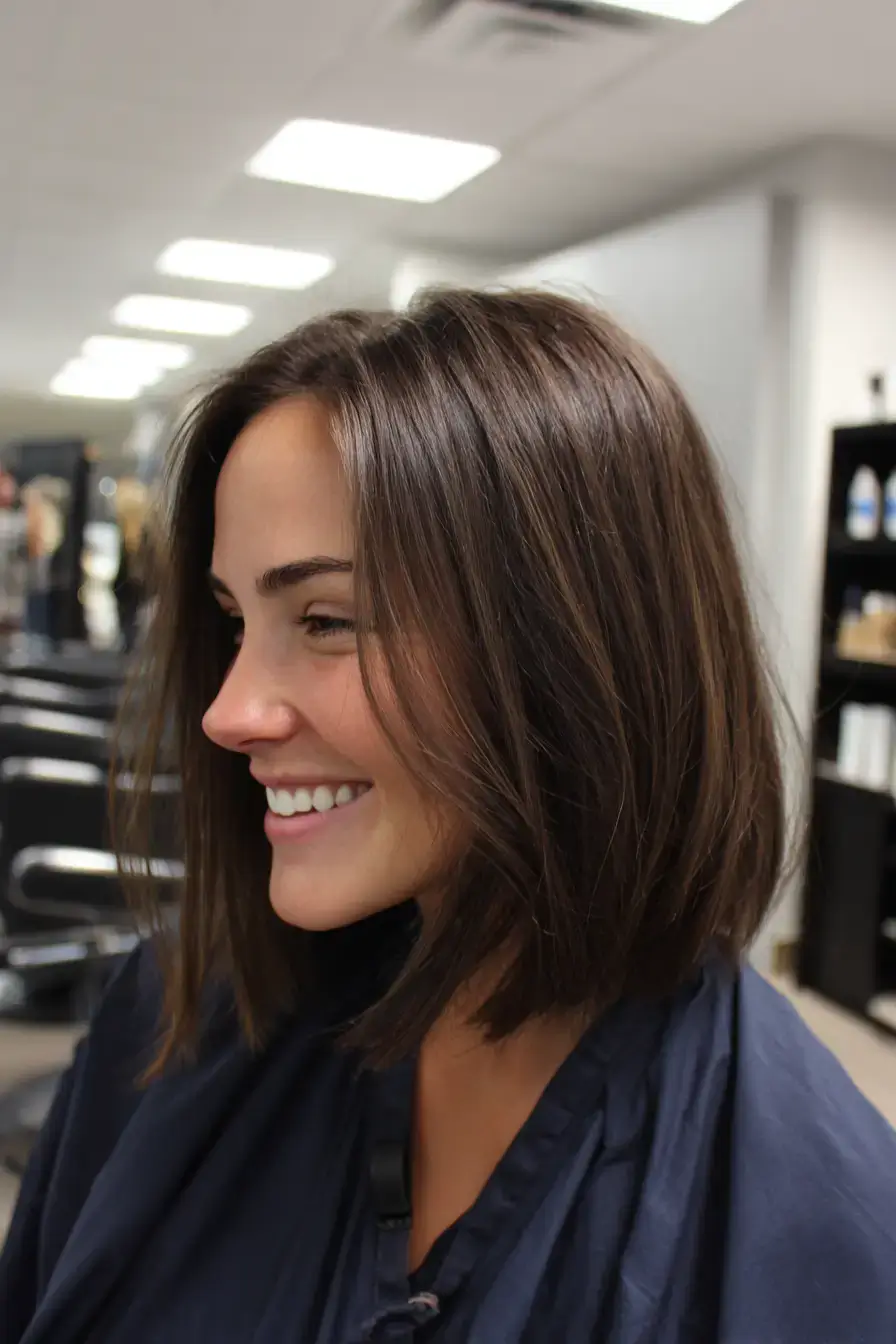
Long angled bob haircuts drop the front to the collarbone while the back sits at the shoulder, so the angle reads over two inches. I cut the back at the shoulder on dry hair, angle the front down to the collarbone, then point cut the ends. It suits fine to thick density and 1A to 2A texture on round, square, and oval faces. Blow-dry smooth with a round brush and finish with serum. Trim every eight weeks.
3. Angled Bob With Curtain Bangs
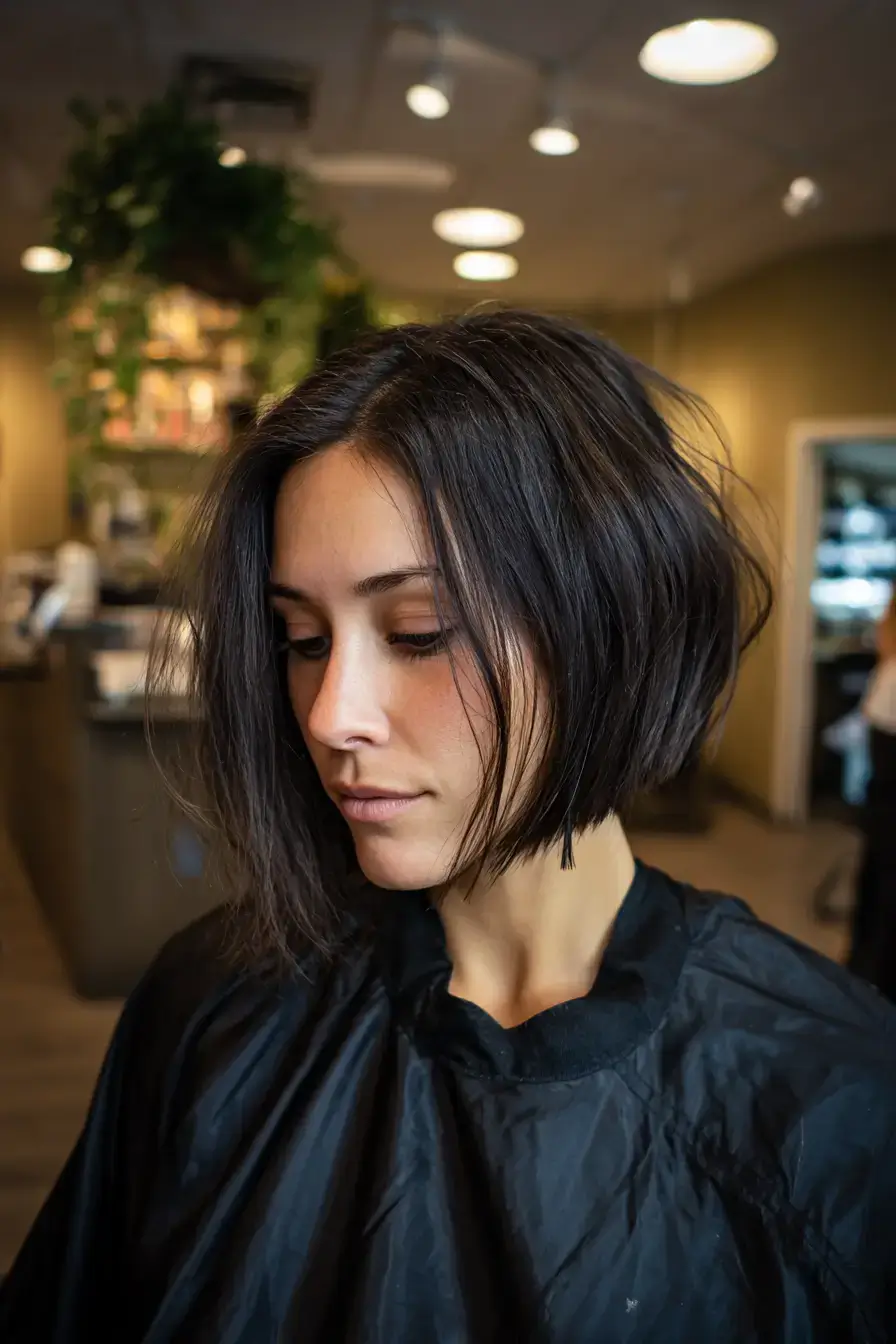
Curtain bangs on an angled bob soften the diagonal with a second line from the brow to the cheekbone. I cut the nape an inch shorter than the front on dry hair, angle to the jaw, section a triangle, then cut the bangs from the brow to the cheekbone. It suits fine to medium density and 1B to 2B texture on round and square faces. Blow-dry the bangs out with a small round brush. Trim the bangs every five weeks.
4. Angled Bob for Fine Hair

An angled bob on fine hair stays blunt along the angle so the line reads thick. I cut the nape an inch shorter than the front on dry hair with the shears flat, angle to the jaw, then point cut two short crown layers for lift. It suits fine density and 1A to 2A texture on oval and round faces. Apply a mousse to damp roots and blow-dry with a round brush. Trim every six weeks.
5. Stacked Angled Bob
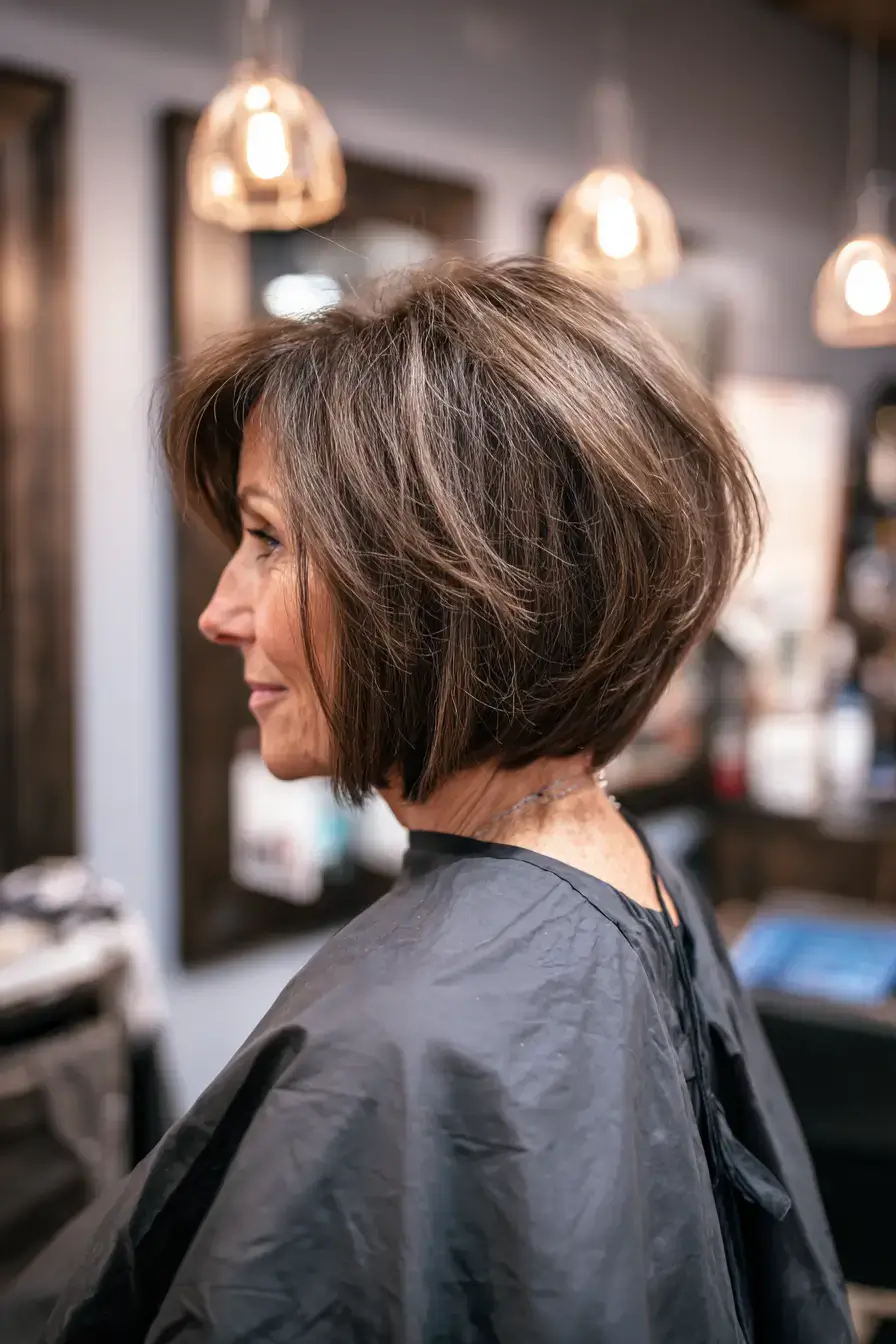
A stacked angled bob builds graduation at the nape so the back lifts while the front drops to the jaw. I cut the nape short with graduation on dry hair, build the weight line at the occipital, then angle the front down. It suits fine to thick density and 1A to 2A texture on round and square faces. Blow-dry with a round brush rolling the front under and lifting the stack. Trim every five weeks.
6. Long Angled Bob Haircuts With Layers
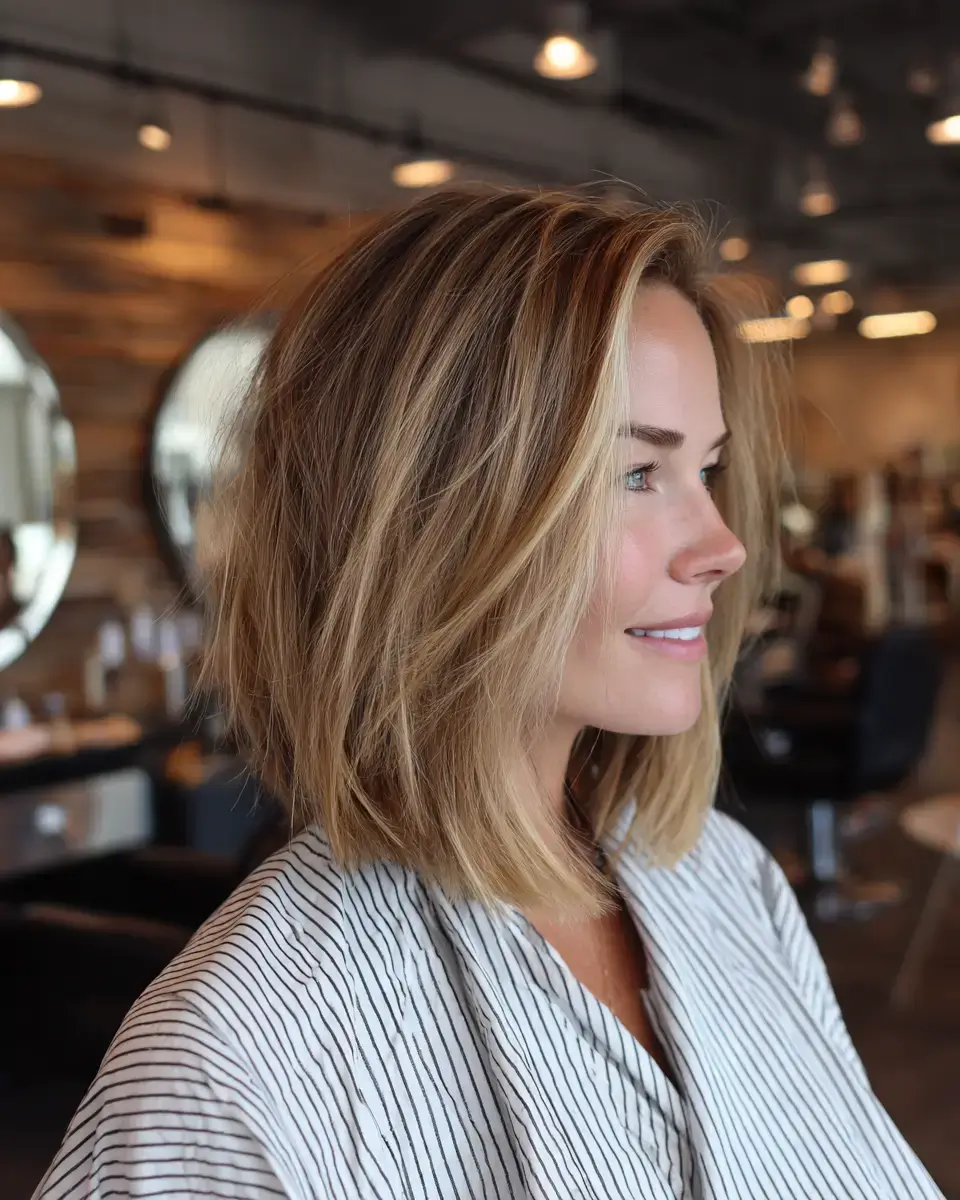
Long angled bob haircuts with layers keep the collarbone angle and add layers from the chin so the front moves. I cut the back at the shoulder on dry hair, angle the front to the collarbone, then point cut layers from the chin. It suits fine to medium density and 1A to 2B texture on most face shapes. Blow-dry with a round brush rolling the ends under and finish with a light cream. Trim every eight weeks.
7. Angled Bob for Thick Hair

An angled bob on thick hair takes internal layers so the angle sits flat instead of flaring. I cut the nape an inch shorter than the front on dry hair, angle to the jaw, then point cut internal layers through the sides and back without touching the outline. It suits thick density and 1A to 2B texture on any face shape. Blow-dry flat with a paddle brush and a smoothing cream. Trim every six weeks.
8. Angled Bob Over 50
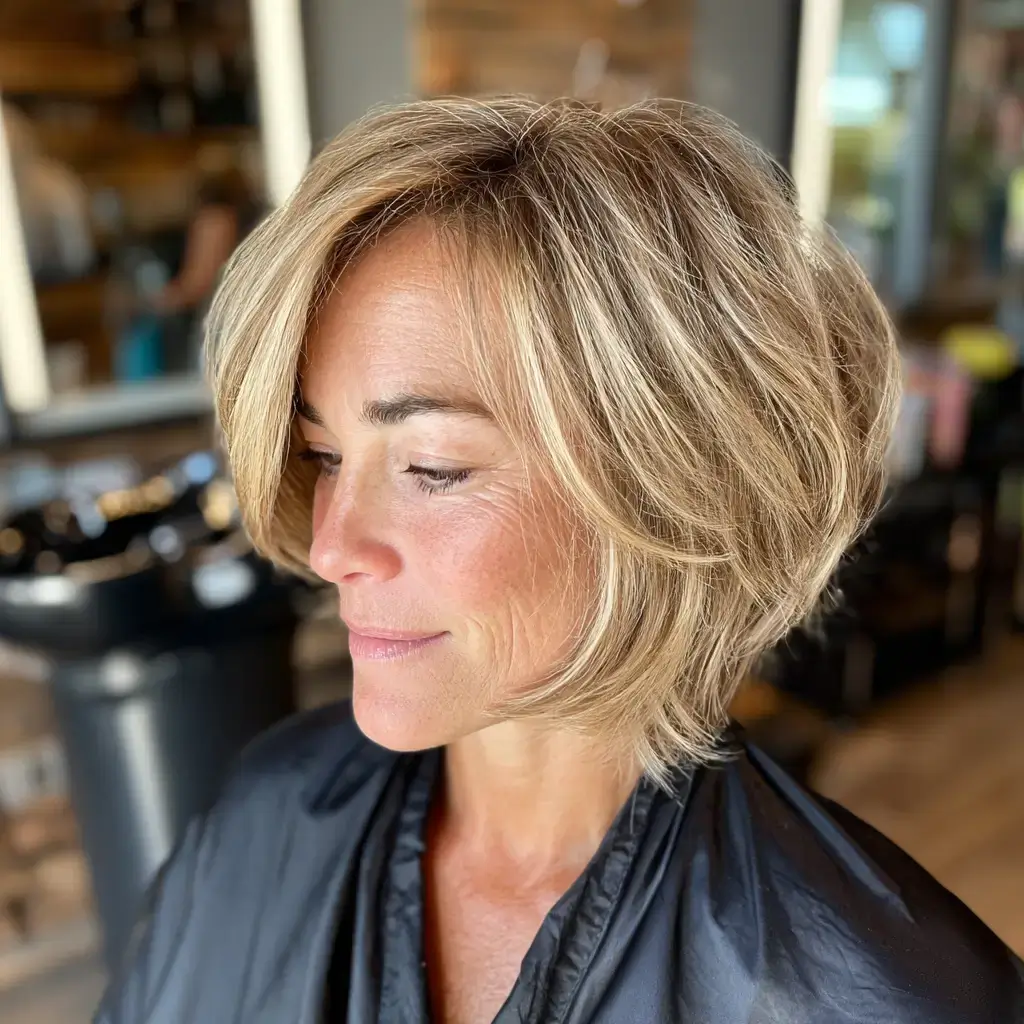
The angled bob over 50 keeps the front at the chin, the back at the nape, and a side swept fringe to the cheekbone. I cut the nape on dry hair, angle the front to the chin with point cut ends, then cut the fringe from the part to the cheekbone. It suits fine to medium density and 1A to 2A texture. Blow-dry with a round brush and a smoothing cream. Trim every six weeks.
9. Wavy Angled Bob
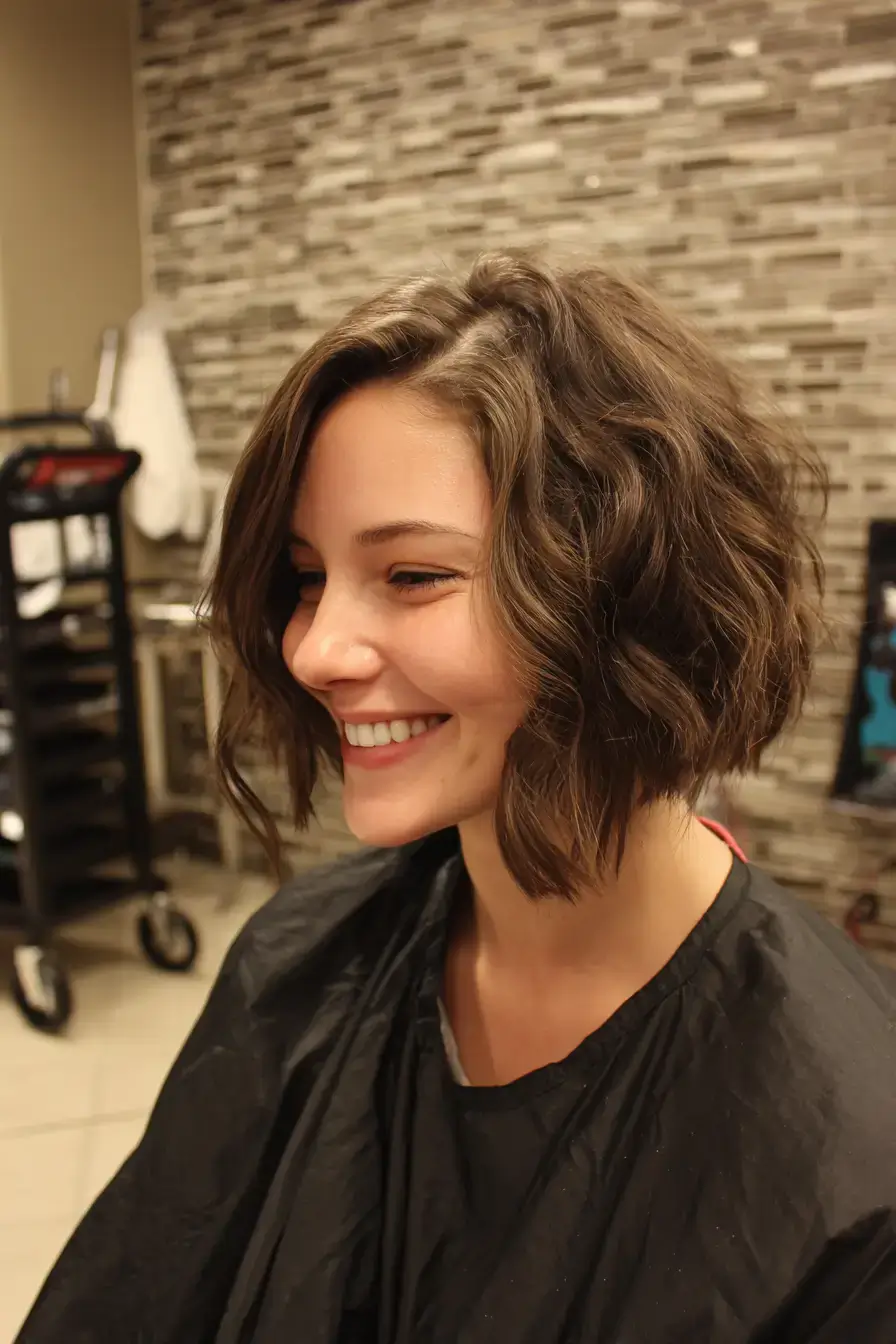
A wavy angled bob bends the front pieces so the angle reads softer than a straight blowout. I cut the nape an inch shorter than the front on dry hair, angle to the jaw, then point cut the ends. It suits fine to medium density and 1B to 2B texture on round and square faces. Wave the front with a one-inch iron, leave the ends straight, and break up with a texture spray. Trim every six weeks.
10. Long Angled Bob Haircuts With Side Part
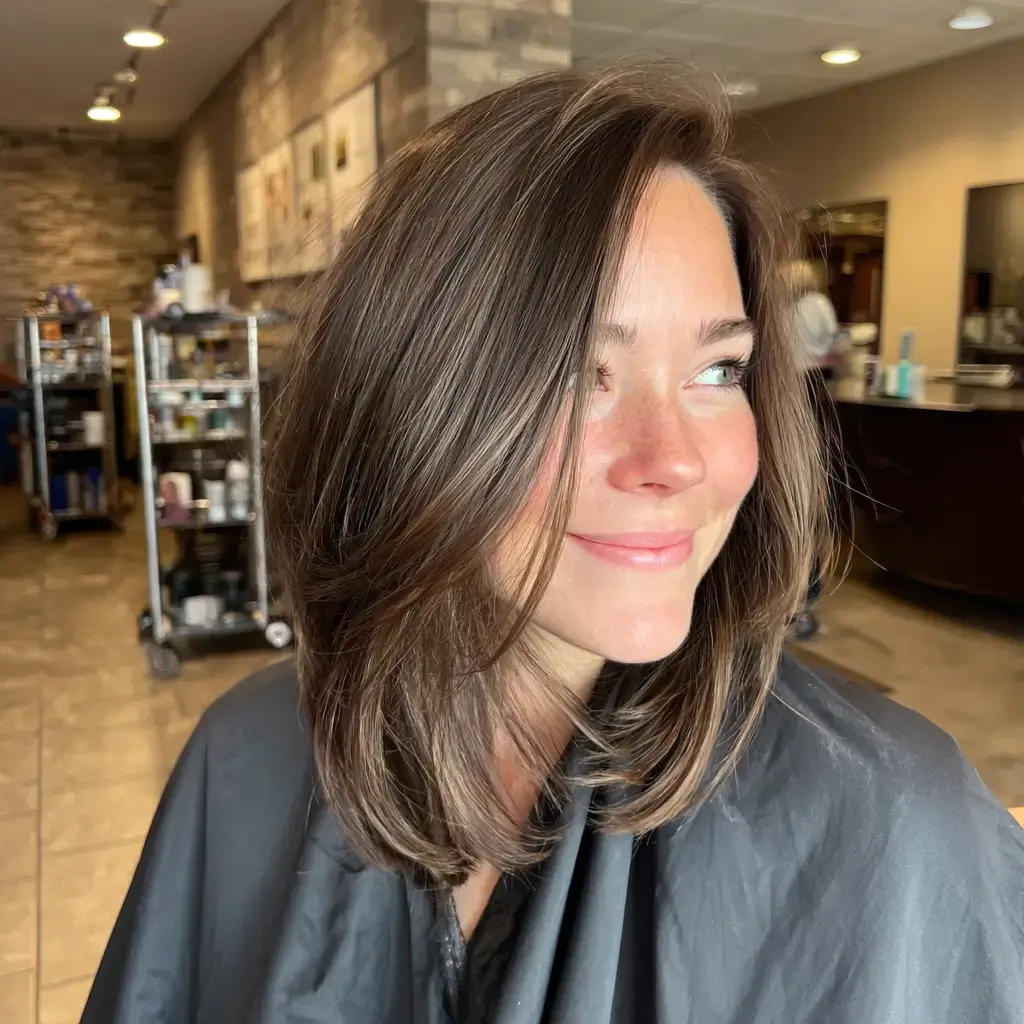
Long angled bob haircuts with a side part push the longer front piece to one side so the angle shows from the front. I cut the back at the shoulder on dry hair, angle the front to the collarbone, then part two inches off center. It suits fine to thick density and 1A to 2B texture on round and square faces. Blow-dry smooth with a round brush and tuck the short side. Trim every eight weeks.
11. Angled Bob With Blunt Fringe
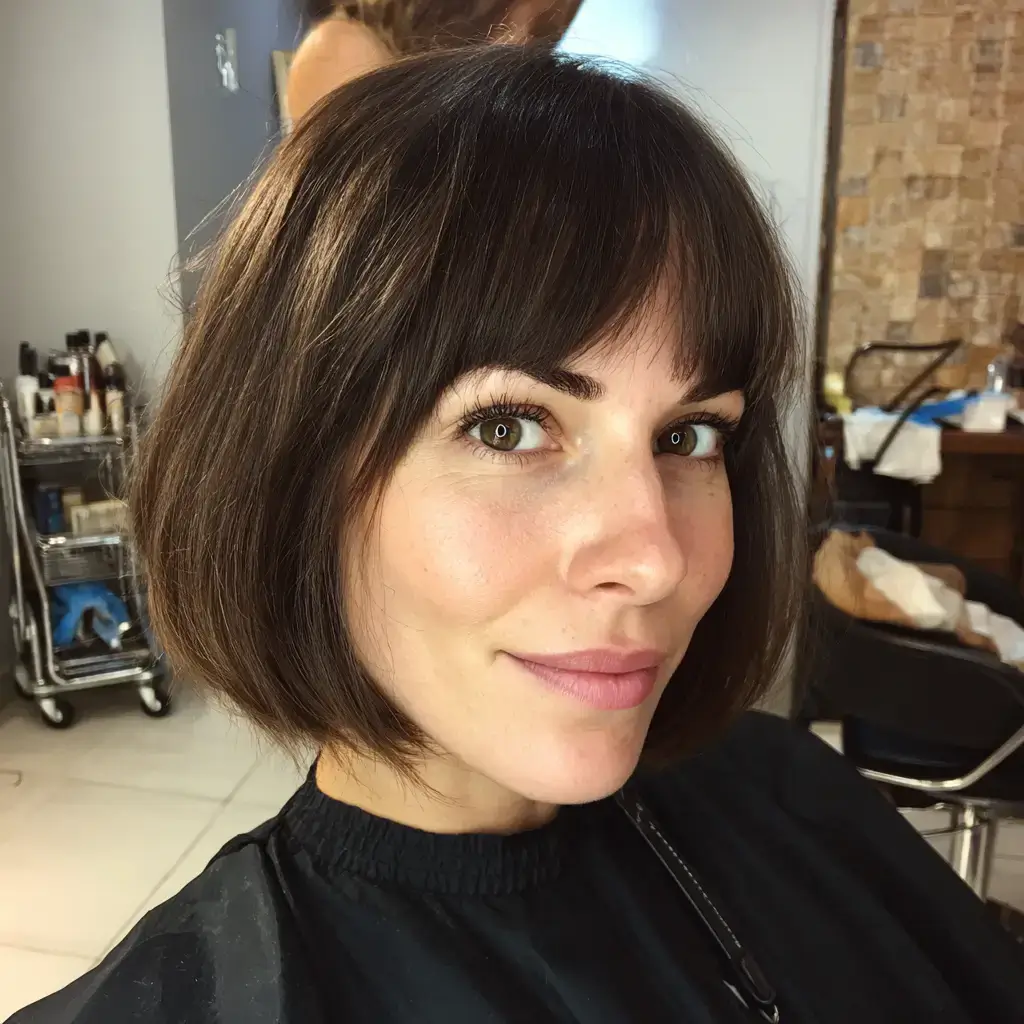
A blunt fringe on an angled bob adds a horizontal line against the diagonal. I cut the nape an inch shorter than the front on dry hair, angle to the jaw, then cut the fringe at the brow with the shears flat. It suits fine to medium density and 1A to 1C texture on oval and oblong faces. Blow-dry the fringe down with a flat brush and the bob under with a round brush. Trim the fringe every four weeks.
12. Sleek Angled Bob
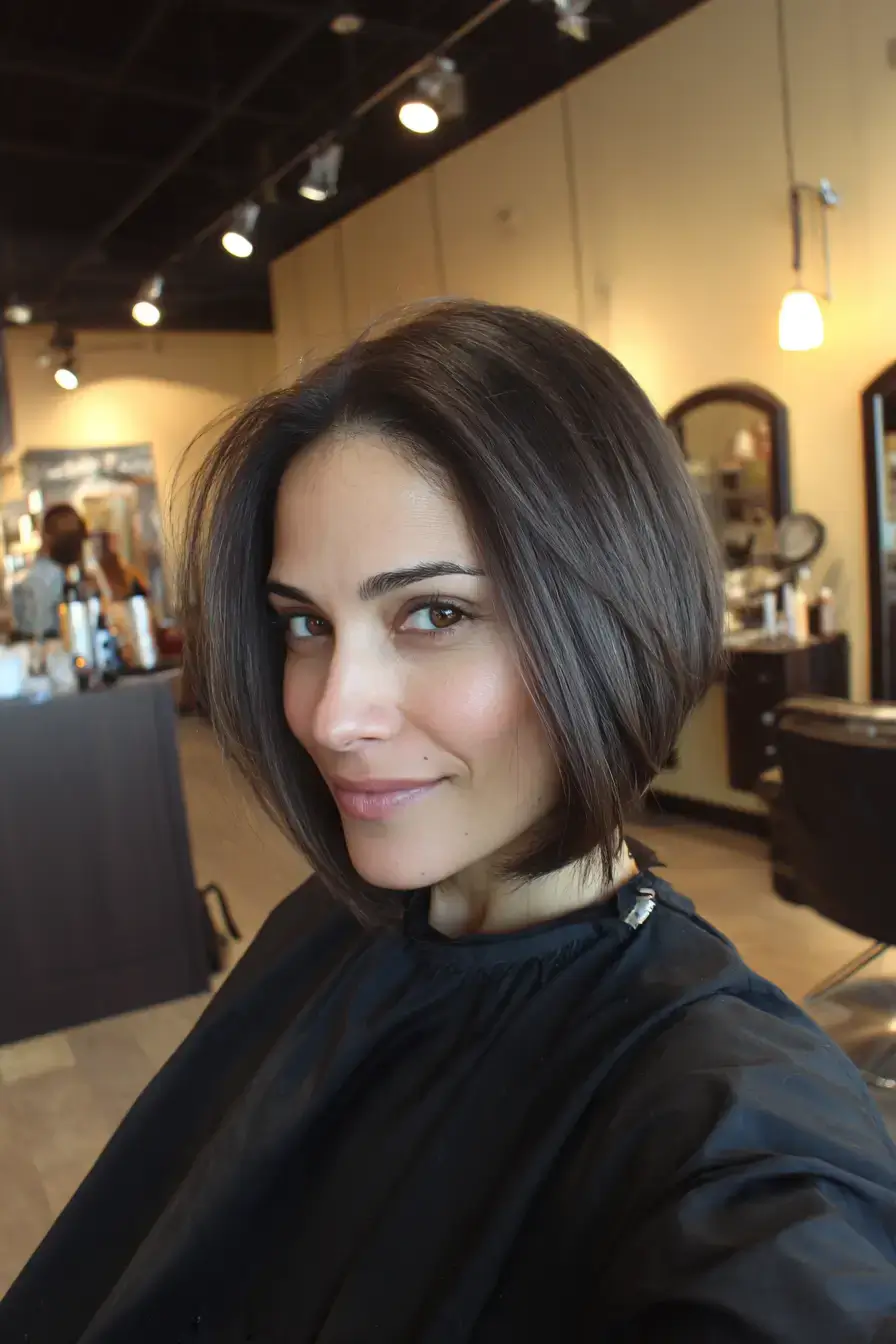
A sleek angled bob shows the diagonal against a flat surface, so every piece has to lie down. I cut the nape an inch shorter than the front on dry hair with the shears flat, then angle to the jaw. It suits fine to thick density and 1A to 1C texture on round and square faces. Blow-dry flat with a paddle brush, flat iron with a heat protectant, and finish with serum. Trim every six weeks.
13. Angled Bob Over 60
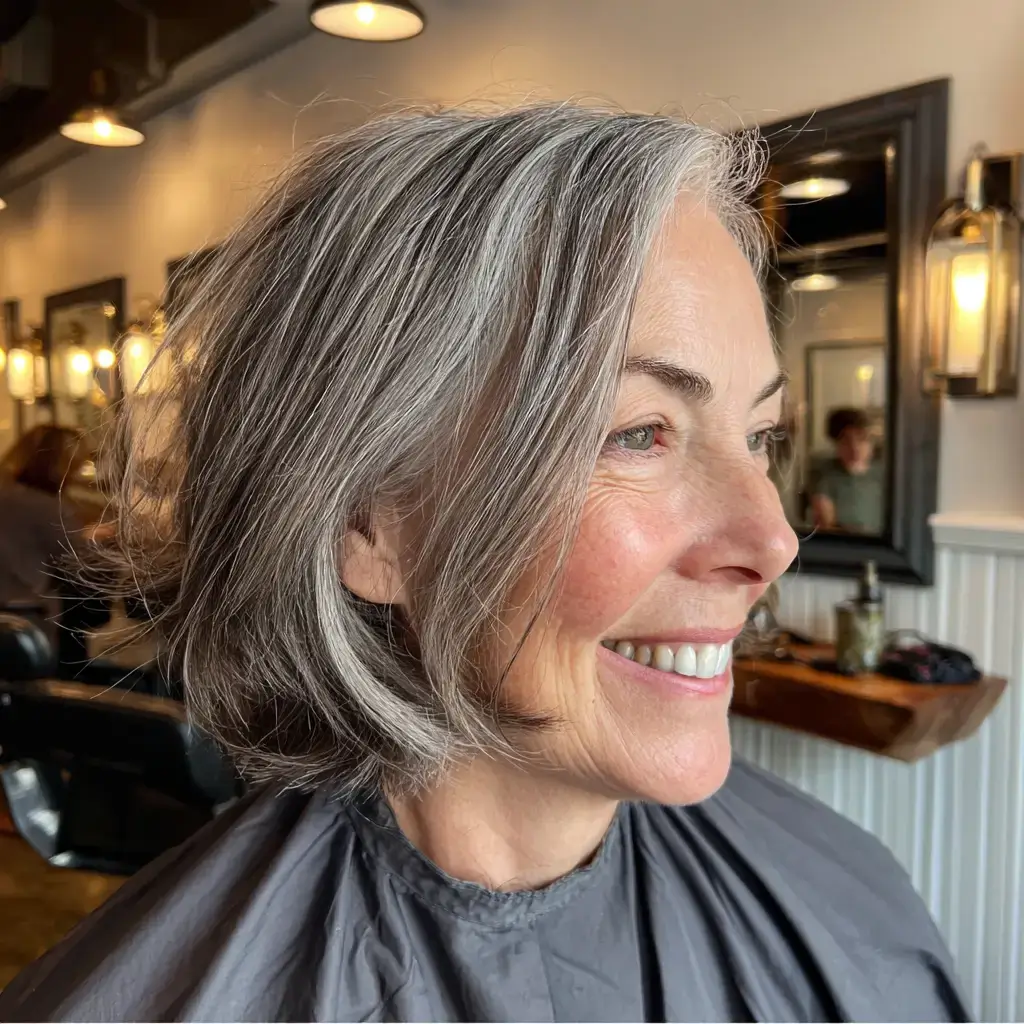
For the angled bob over 60, I keep the front at the chin, the nape soft rather than stacked, and the ends point cut so they stay thick. I cut on dry hair, angle the line to the chin, then texturize lightly. It suits fine to medium density and 1A to 2A texture. Blow-dry with a round brush and mousse at the roots. Trim every six weeks and gloss every eight.
14. Curly Angled Bob
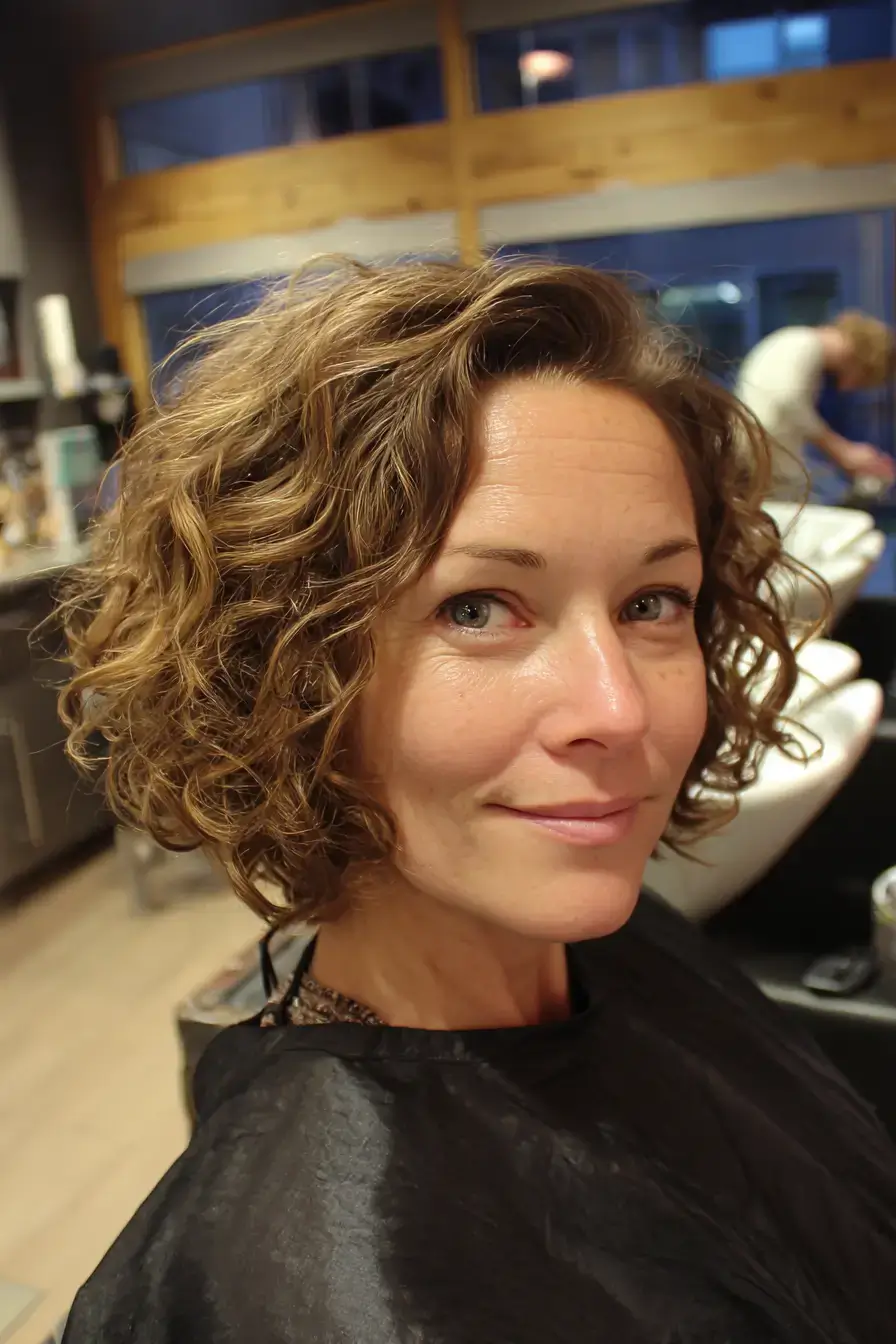
A curly angled bob is cut dry, curl by curl, so the angle still shows once the curl springs. I cut the nape curl by curl to land an inch shorter than the front, then angle the front to the jaw. It suits medium to thick density and 3A to 3C texture on oval and heart faces. Rake a curl cream through wet hair and diffuse on low. Trim every eight weeks.
15. Long Angled Bob Haircuts for Round Faces
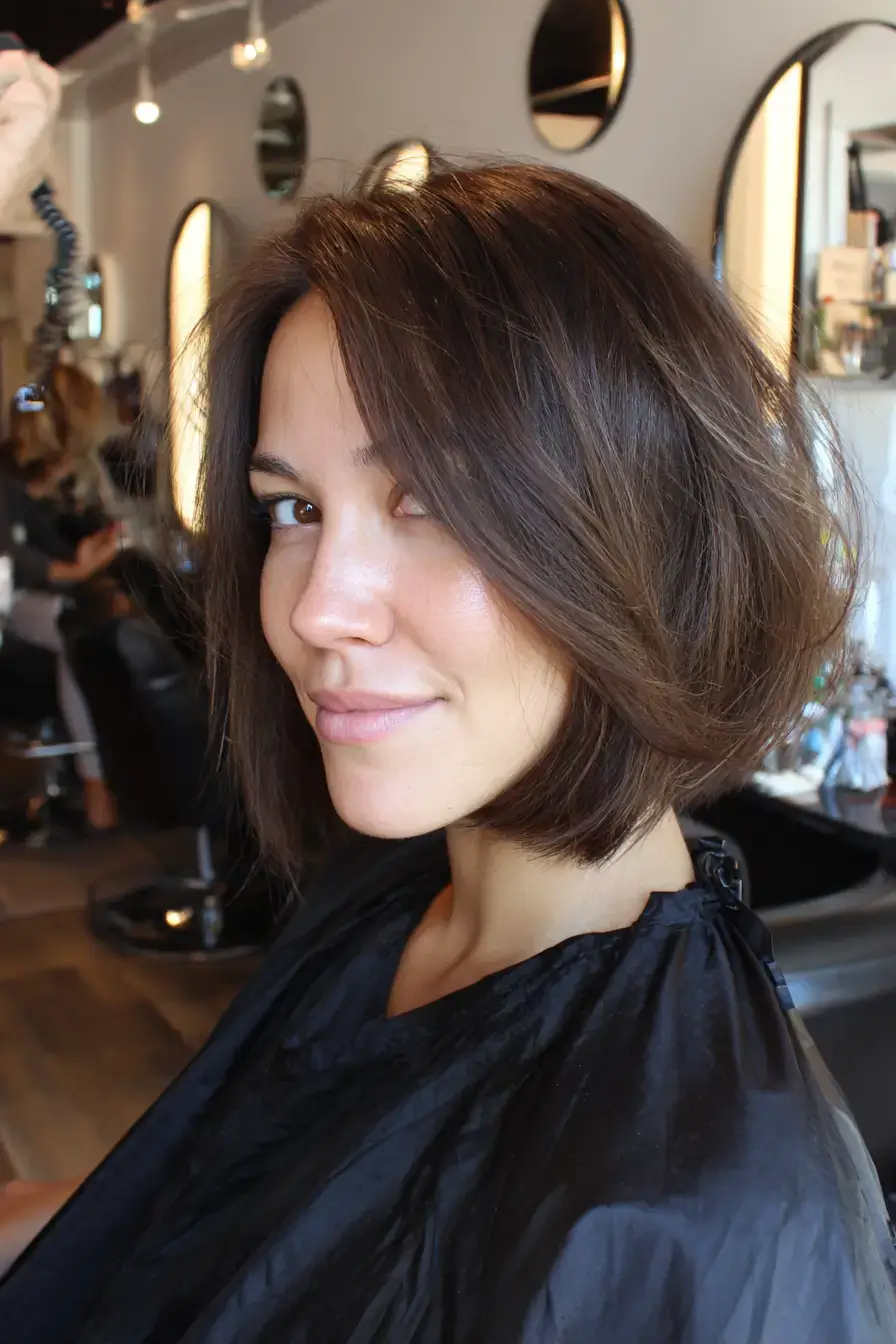
Angled bob haircuts on a round face drop the front past the chin so the diagonal pulls the eye down. I cut the back at the shoulder on dry hair, angle the front to the collarbone, then point cut one layer below the chin. It suits fine to thick density and 1A to 2B texture. Blow-dry smooth with a round brush and lift the crown. Trim every eight weeks.
16. Angled Bob With Money Piece
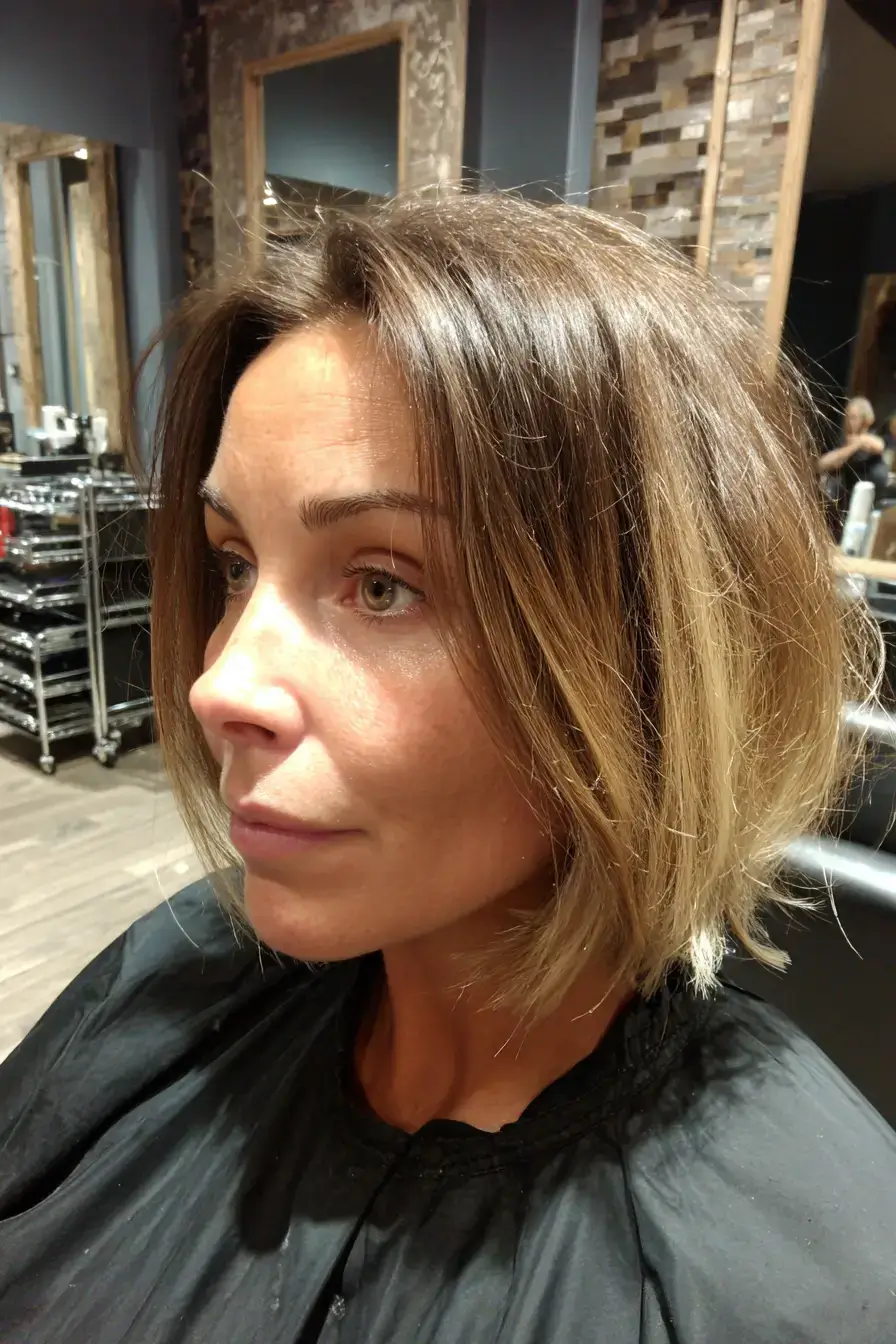
A money piece on an angled bob lights the longer front pieces where the angle is longest. I cut the nape an inch shorter than the front on dry hair, angle to the jaw, then lighten the two front sections to a level nine and tone beige. It suits fine to medium density and 1A to 2B texture. Blow-dry the front out with a round brush. Refresh every ten weeks.
17. Textured Angled Bob

A textured angled bob is point cut deep through the ends so the diagonal reads soft. I cut the nape an inch shorter than the front on dry hair, angle to the jaw, then point cut an inch into the ends. It suits medium to thick density and 1B to 2B texture on oval and square faces. Rough-dry with a texture spray and bend the ends with a flat iron. Trim every six weeks.
18. Angled Bob With Side Swept Bangs
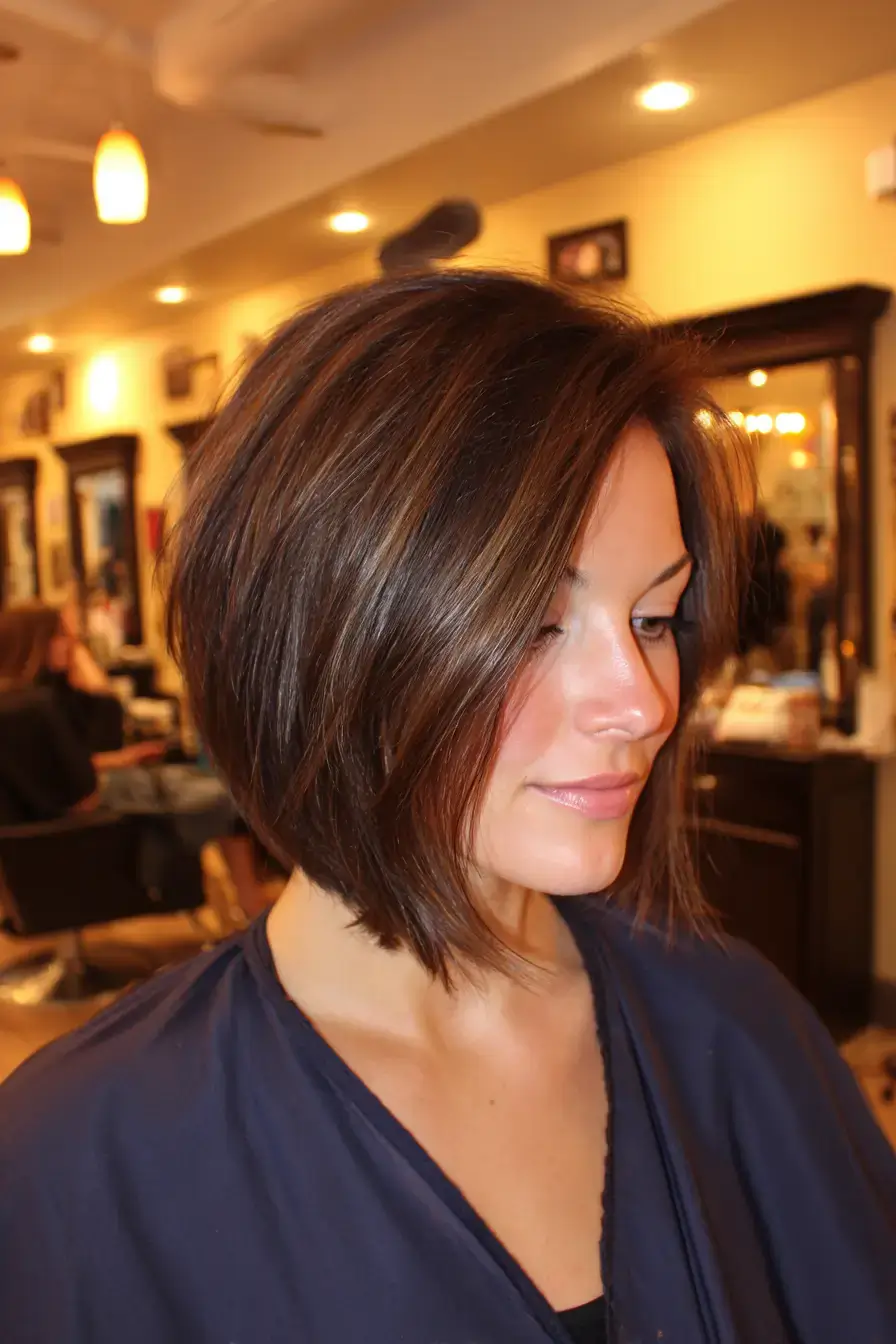
Side swept bangs on an angled bob run in the same direction as the diagonal, from the part to the cheekbone. I cut the nape an inch shorter than the front on dry hair, angle to the jaw, then cut the bangs from the part to the cheekbone. It suits fine to medium density and 1A to 2B texture on round and square faces. Blow-dry the bangs across with a flat brush. Trim the bangs every five weeks.
19. Copper Angled Bob
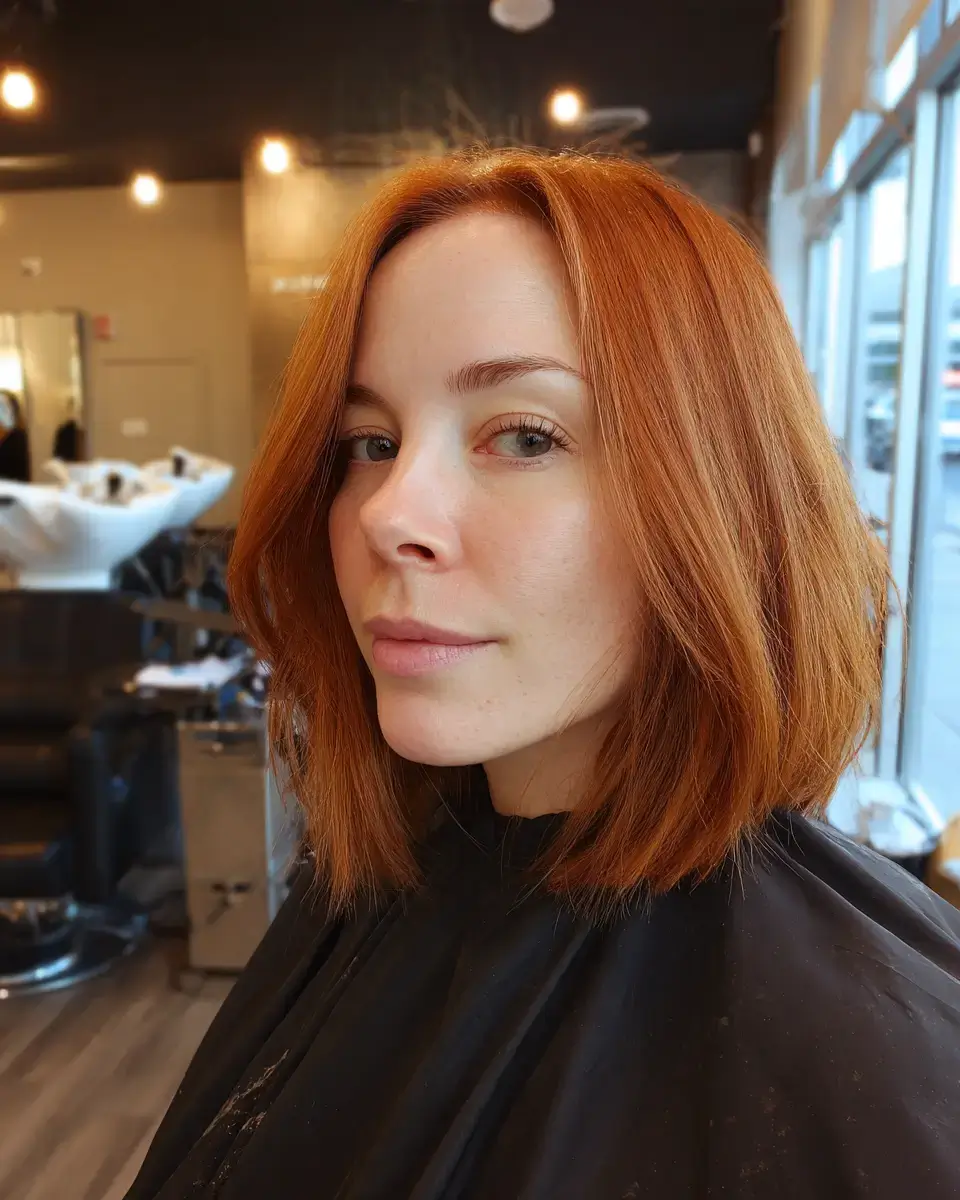
Copper on an angled bob reads bright along the diagonal. I cut the nape an inch shorter than the front on dry hair, angle to the jaw, then apply a level seven copper at the root and a demi on the ends. It suits fine to medium density and warm skin tones. Blow-dry with a round brush and finish with serum. Trim every six weeks and refresh the tone every five.
20. Long Angled Bob Haircuts With Balayage
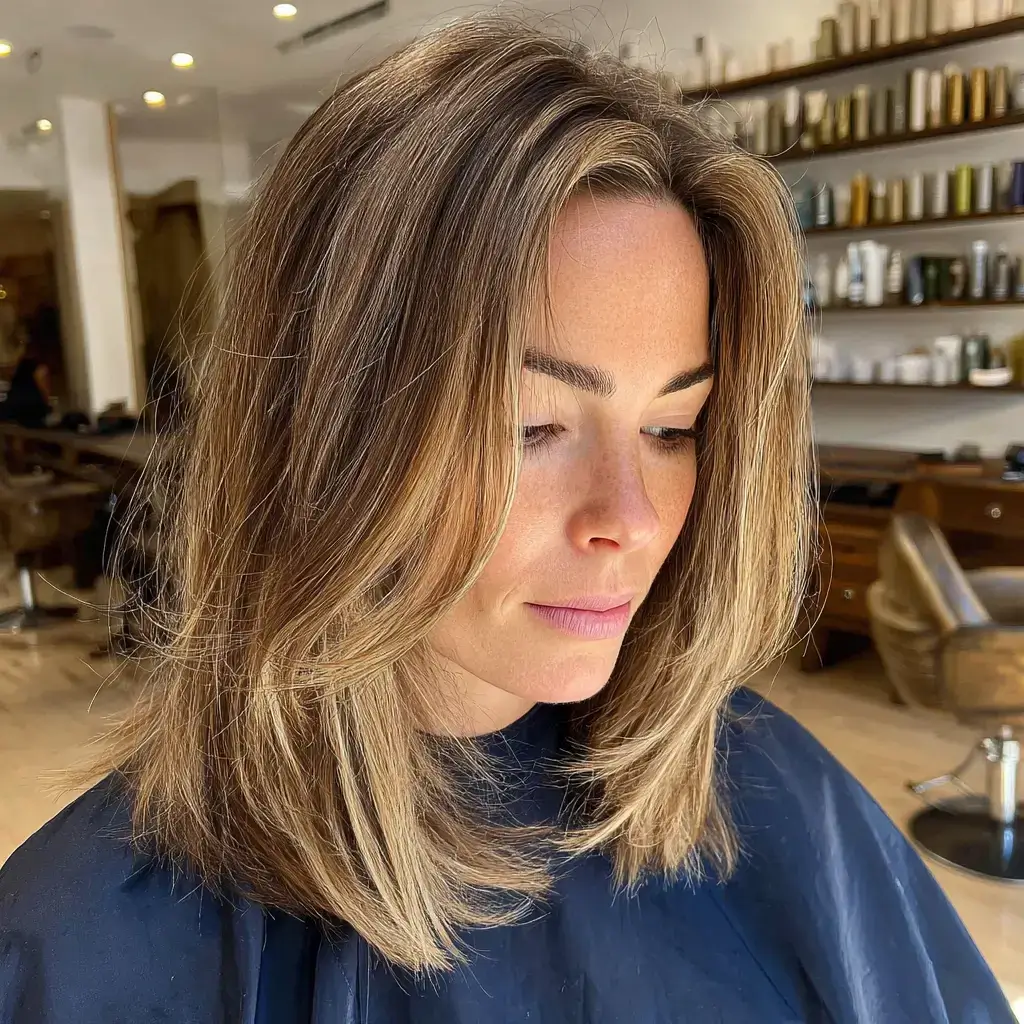
Balayage on long angled bob haircuts is painted brightest at the front where the angle is longest. I cut the back at the shoulder on dry hair, angle the front to the collarbone, then hand paint the front pieces and ends to a level nine. It suits fine to thick density and 1A to 2B texture. Blow-dry with a round brush and finish with serum. Refresh every twelve weeks.
21. Angled Bob for Square Faces
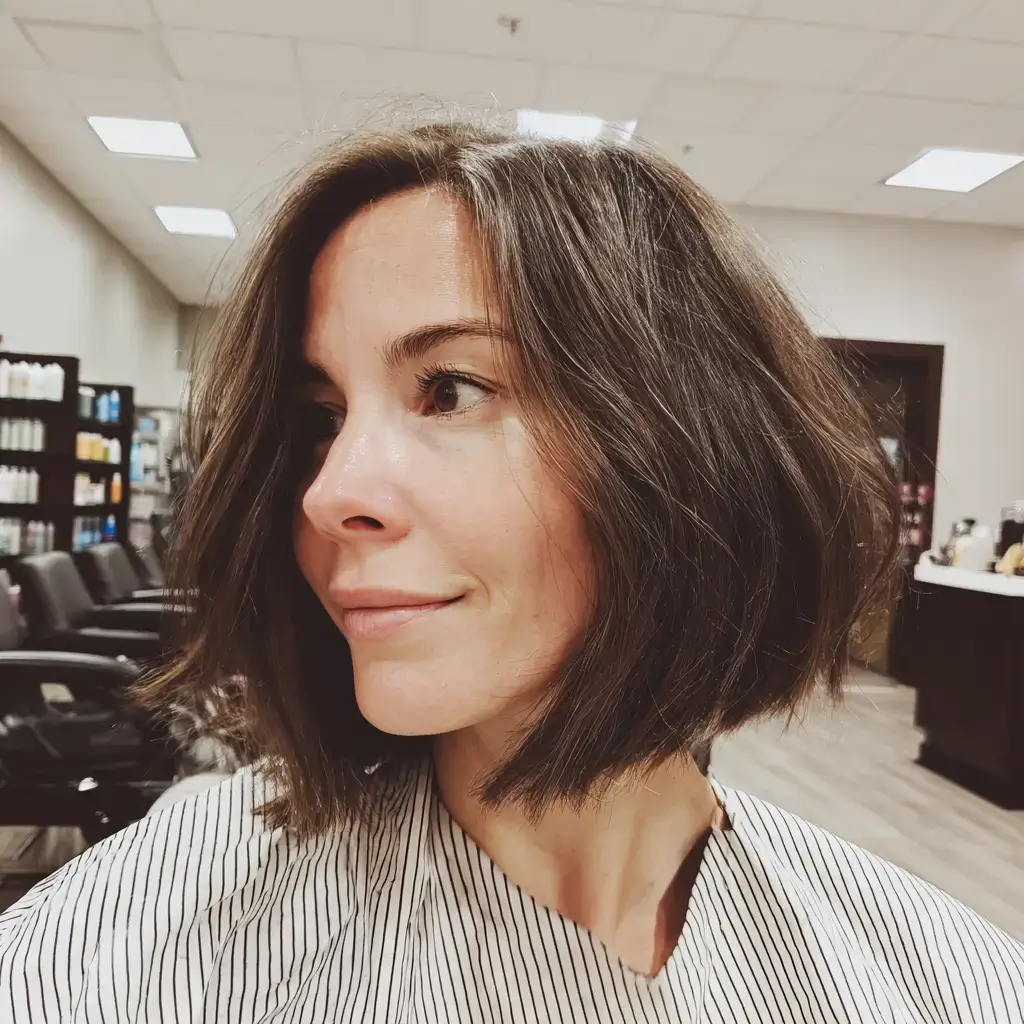
Angled bob haircuts on a square face drop the front below the jaw so the diagonal passes the corners. I cut the nape an inch shorter than the front on dry hair, angle the front to an inch below the jaw, then point cut the ends. It suits fine to thick density and 1A to 2B texture. Blow-dry with a round brush rolling the front under. Trim every six weeks.
22. Angled Bob With Shadow Root
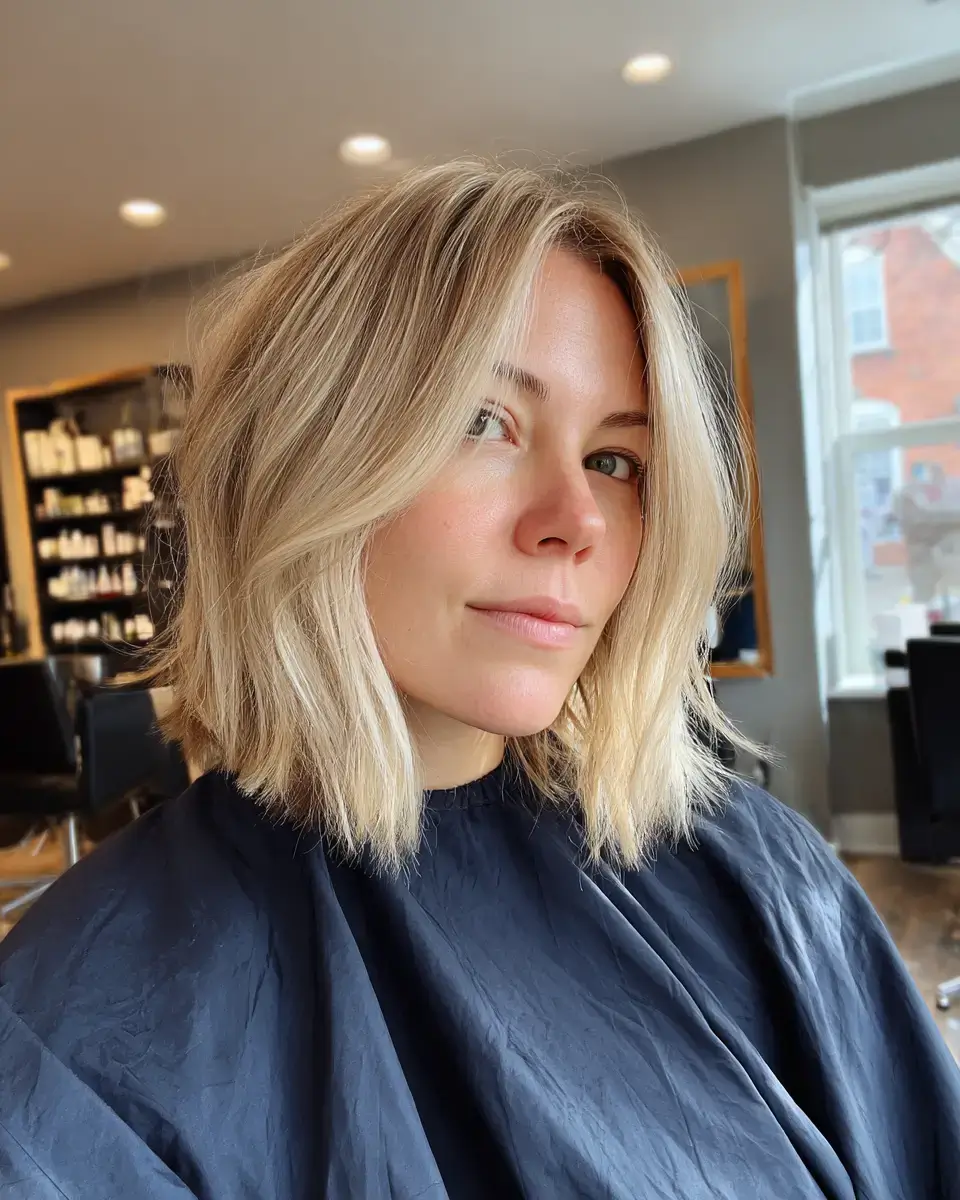
A shadow root on a blonde angled bob keeps depth at the part and light along the angle. I cut the nape an inch shorter than the front on dry hair, angle to the jaw, then apply a level six demi at the root and leave the lengths level nine. It suits fine to medium density and 1A to 2B texture. Blow-dry with a round brush. Trim every six weeks and refresh the root every ten.
23. Angled Bob for Straight Hair

An angled bob on straight hair holds the diagonal without product, so the cut has to be clean. I cut the nape an inch shorter than the front on dry hair with the shears flat, then angle to the jaw. It suits fine to medium density and 1A to 1C texture on round and square faces. Blow-dry flat with a paddle brush and bend the front under with a flat iron. Trim every six weeks.
24. Dark Brunette Angled Bob
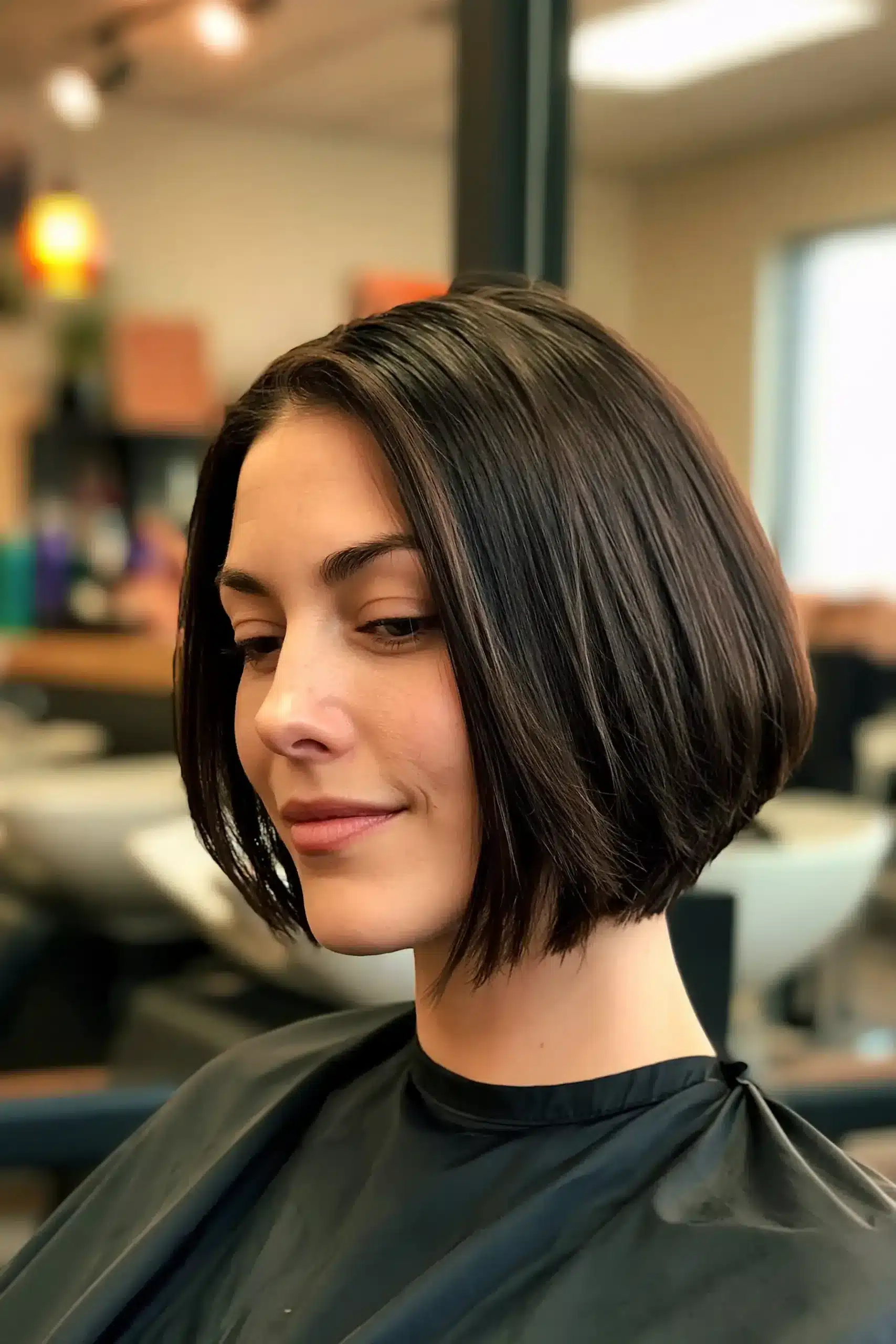
Dark brunette on an angled bob makes the diagonal read sharp against the skin. I cut the nape an inch shorter than the front on dry hair with the shears flat, angle to the jaw, then apply a level four demi from root to end. It suits fine to thick density and cool or neutral skin tones. Blow-dry flat with a paddle brush and finish with serum. Refresh the tone every eight weeks.
25. Long Angled Bob Haircuts That Air Dry

Angled bob haircuts that air-dry have one layer below the chin and a side part, so the angle falls without a brush. I cut the back at the shoulder on dry hair, angle the front to the collarbone, then point cut one layer below the chin. It suits fine to medium density and 1C to 2B texture on any face shape. Apply a light cream to damp hair, part to one side, and leave it. Trim every eight weeks.
26. Inverted Angled Bob
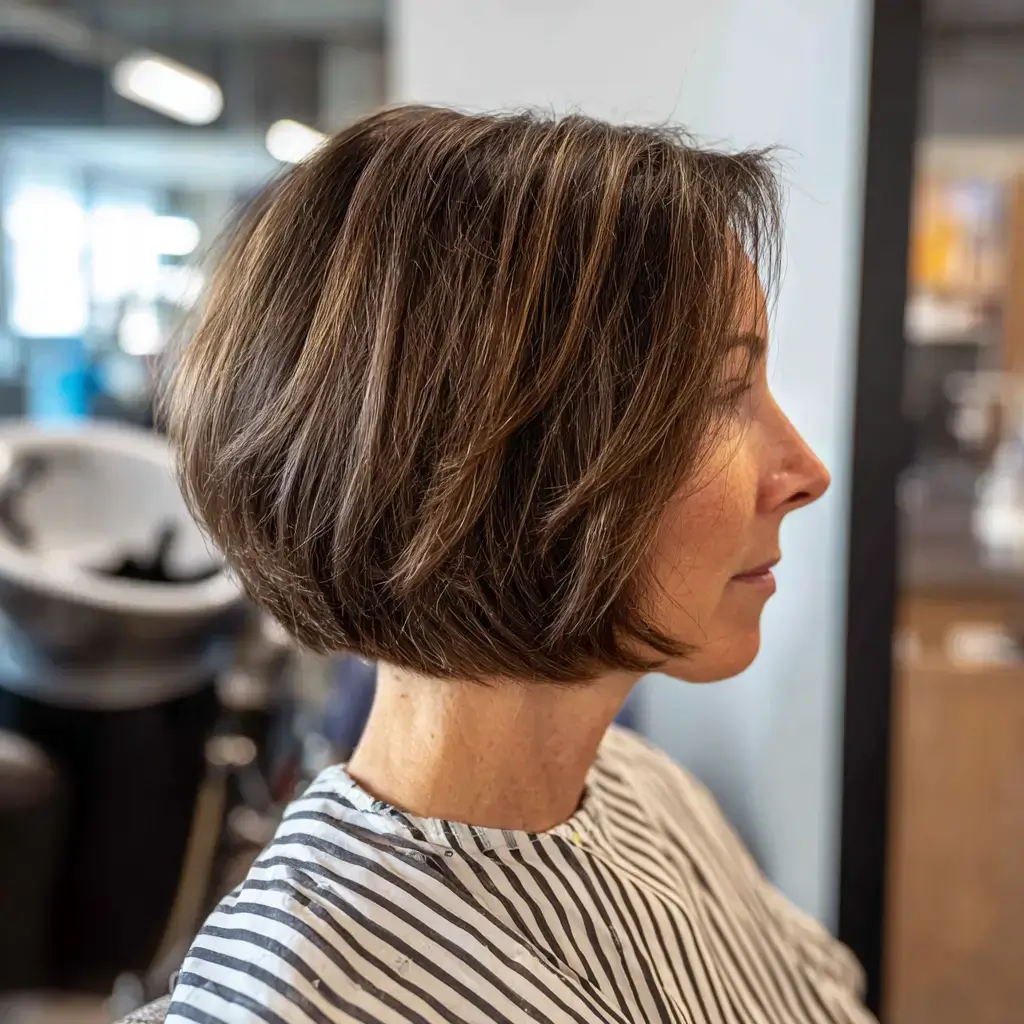
An inverted angled bob stacks the back tighter than a standard angle so the nape lifts and the front drops to the chin. I cut the nape with tight graduation on dry hair, build the weight line high at the occipital, then angle the front to the chin. It suits fine to thick density and 1A to 2A texture on round and square faces. Blow-dry with a round brush rolling the front under. Trim every five weeks.
27. Platinum Angled Bob
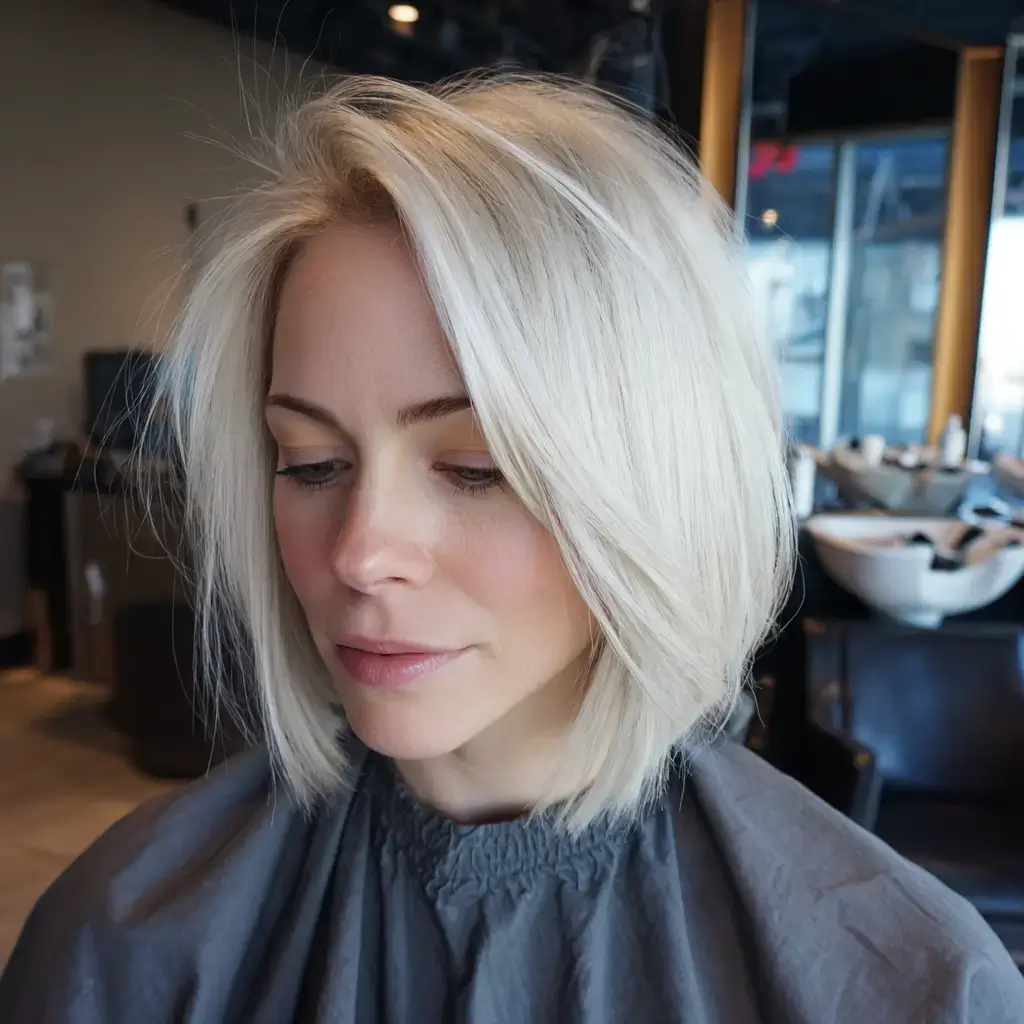
Platinum on an angled bob shows the diagonal line, so the cut has to be clean. I cut the nape an inch shorter than the front on dry hair with the shears flat, angle to the jaw, then lift to a level ten and tone with a violet toner. It suits fine to medium density and cool skin tones. Blow-dry flat with a paddle brush and use a bond builder weekly. Retouch every five weeks.
28. Gray Angled Bob
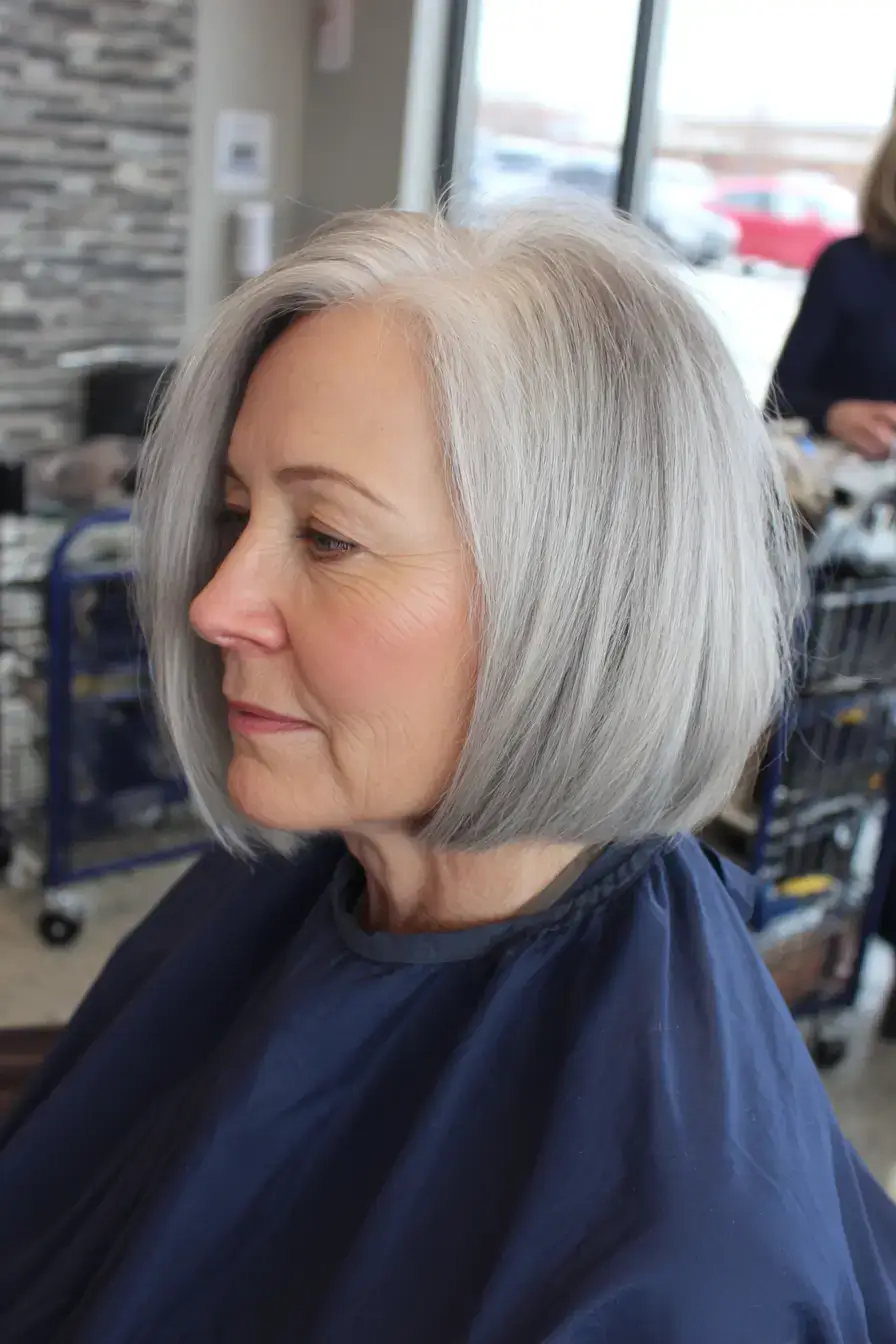
Gray hair on an angled bob reads brighter when the line is blunt and the surface is smooth. I cut the nape an inch shorter than the front on dry hair with the shears flat, angle to the chin, then point cut two crown layers for lift. It suits fine to medium density and 1A to 2A texture on any face shape. Blow-dry with a round brush and finish with a violet-toned serum. Trim every six weeks.
29. Angled Bob With Face Framing Layers
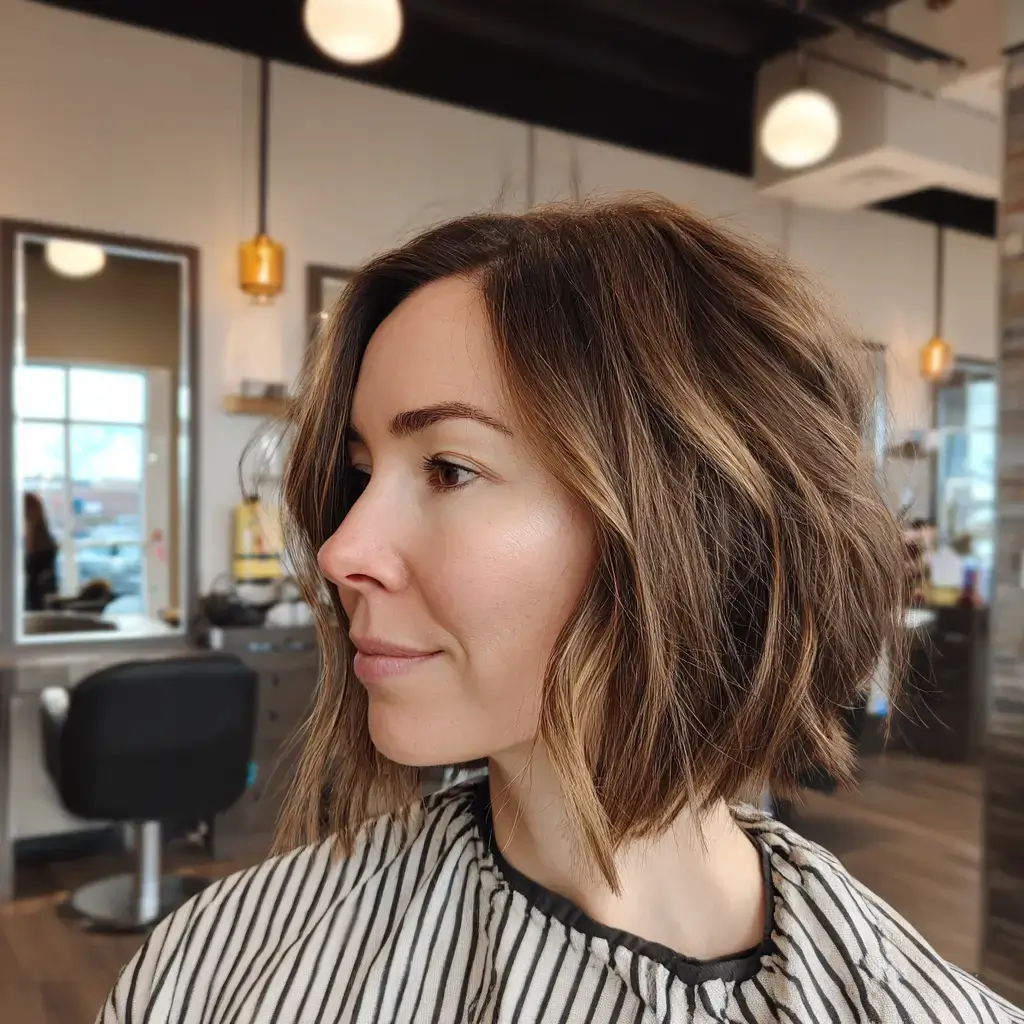
Face framing layers on an angled bob start at the cheekbone and follow the diagonal down to the front point. I cut the nape an inch shorter than the front on dry hair, angle to the jaw, then point cut the face frame from the cheekbone. It suits fine to thick density and 1A to 2B texture on square and round faces. Blow-dry the face frame away from the face with a round brush. Trim every six weeks.
30. Tucked Angled Bob
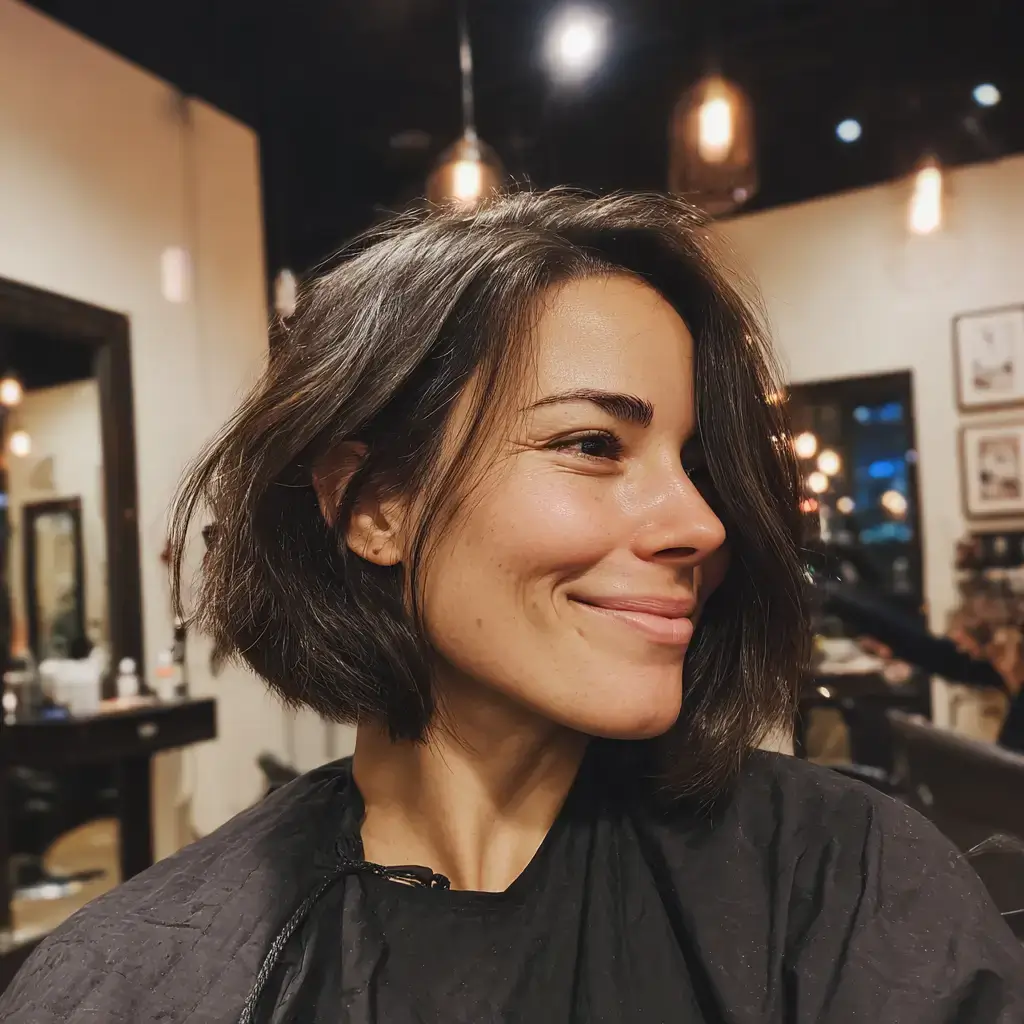
Tucking the short side of an angled bob behind the ear shows the full angle from one side. I cut the nape an inch shorter than the front on dry hair, angle to the jaw, then texturize the tucked side a little shorter. It suits fine to medium density and 1A to 2A texture on oval and heart faces. Blow-dry flat with a paddle brush, tuck the short side, and set with a light spray. Trim every six weeks.
31. Angled Bob With Wispy Bangs
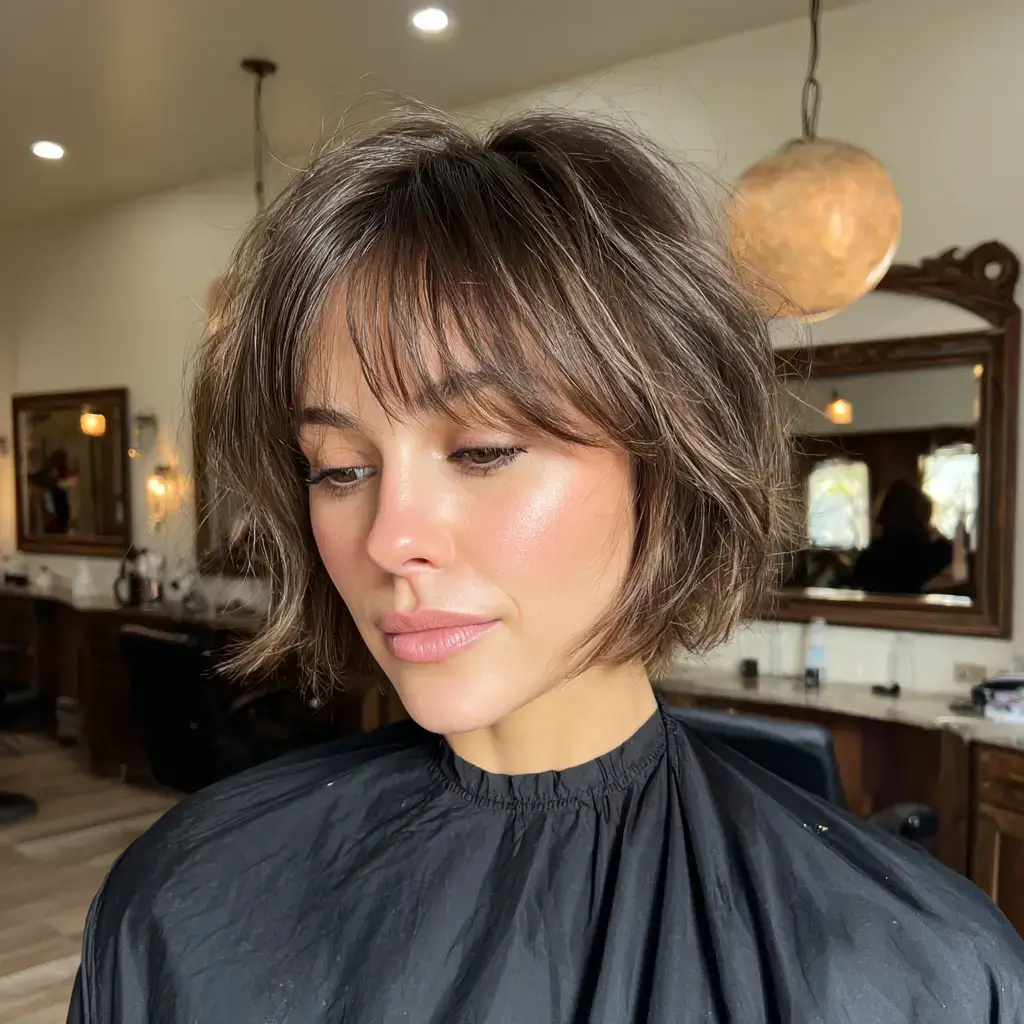
Wispy bangs on an angled bob are point cut thin so they sit between the brows against the clean diagonal. I cut the nape an inch shorter than the front on dry hair, angle to the jaw, then cut the bangs at the brow and point cut until they separate. It suits fine to medium density and 1A to 2A texture on oval and oblong faces. Blow-dry the bangs down and the bob under. Trim the bangs every four weeks.
32. Dramatic Angled Bob
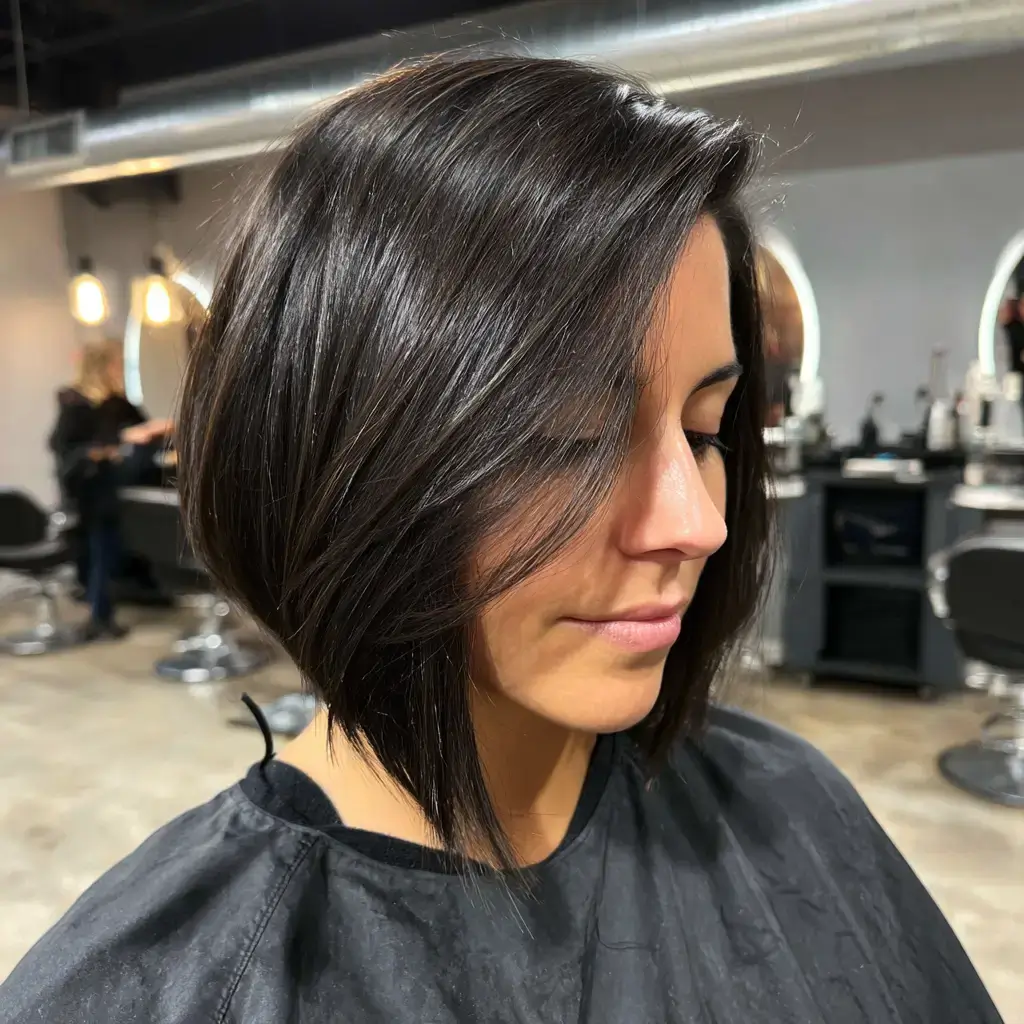
A dramatic angled bob takes the nape to the occipital and drops the front to the collarbone, so the angle runs four inches. I cut the nape short with graduation on dry hair, then angle the front steeply down to the collarbone with the shears flat. It suits medium to thick density and 1A to 1C texture on oval and square faces. Blow-dry flat with a paddle brush and finish with serum. Trim every five weeks.
33. Low Maintenance Angled Bob
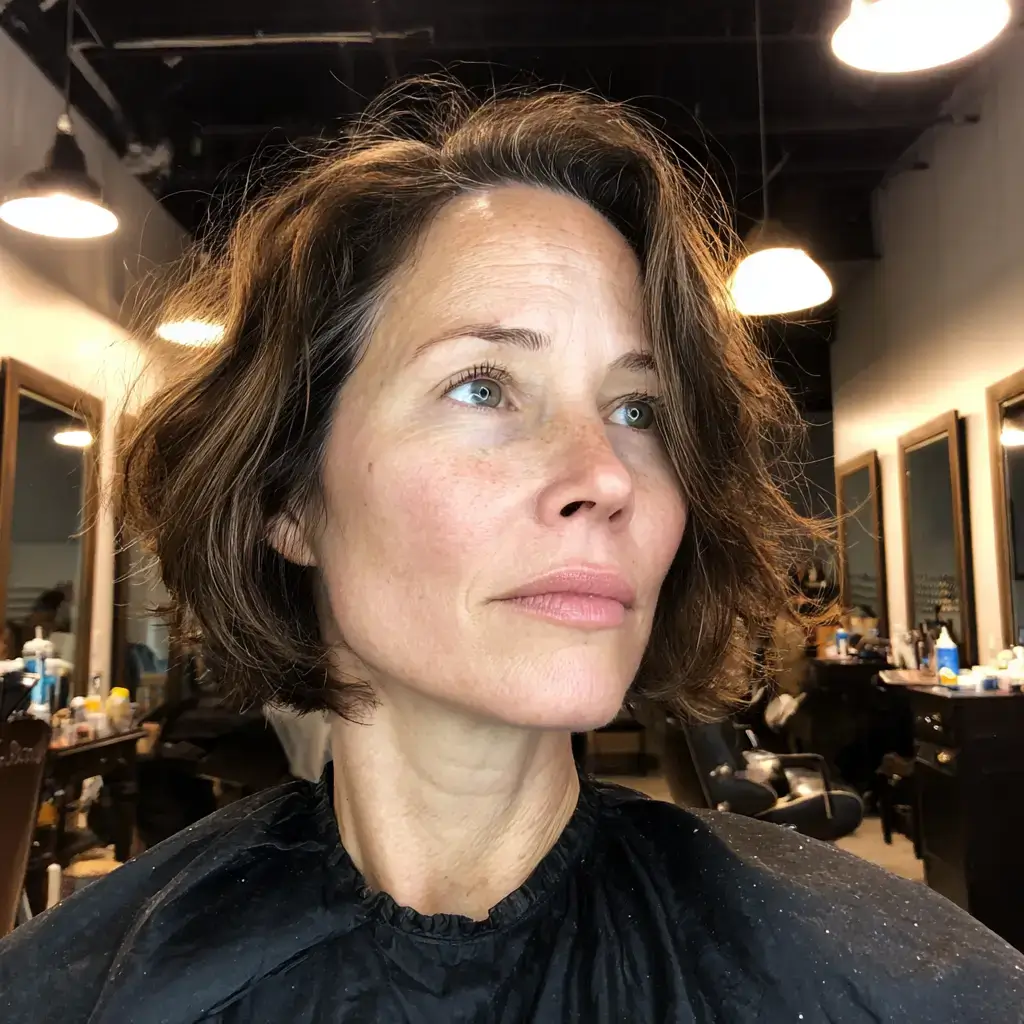
The low maintenance angled bob keeps the angle shallow, an inch from back to front, so it grows out without losing the shape. I cut the nape on dry hair with the shears flat, angle the front to the jaw, then point cut one layer at the chin. It suits fine to medium density and 1A to 2B texture on any face shape. Apply a light cream to damp hair, part to one side, and air-dry. Trim every ten weeks.
An angled bob lives or dies on the one-inch drop from nape to front, and it holds best on 1A to 2B hair you can roll under with a round brush, so the line stays crisp past day three. Angled bob haircuts work best when the back is stacked tight. A round brush does the lifting. oval face haircuts follow the same rule: shape the interior first, then let the perimeter do the talking.


